
Perception, Perspective, and Meaning in Tattoo Art
We don’t all see things the same way.
That sounds simple, but the more I think about it, the more interesting it becomes. Recently, I came across an optical illusion where some people saw squares while others saw circles. Officially known as the Coffer Illusion, is an ambiguous image created by vision scientist Anthony Norcia. At first glance, most people see a grid of rectangular or square panels (coffers). However, The image itself hadn’t changed. What changed was the way the viewer interpreted it.
That got me thinking about tattoos.
A tattoo is usually designed to be seen from a particular perspective. But unlike a painting hanging on a wall, a tattoo lives on a moving, three-dimensional body. It bends, stretches, wraps around curves, and changes as the person wearing it moves.
That creates an opportunity.
What if a tattoo could be more than one image?

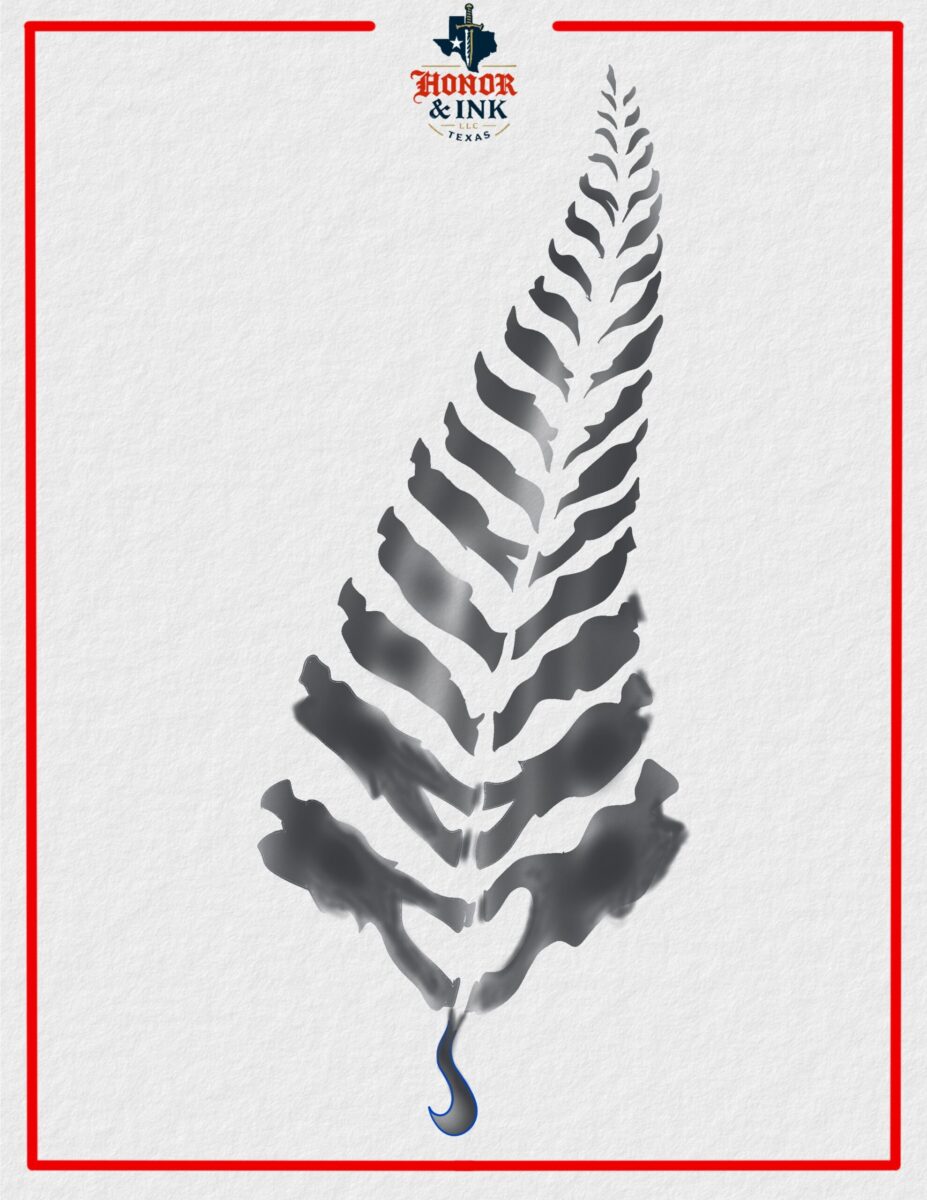
I’ve been experimenting with negative space and visual perception to explore exactly that idea. One of my recent designs appears, at first glance, to be a simple fern leaf. Look closer, though, and the individual shapes become sailors walking into the distance with their sea bags. The people create the fern, while their shadows and the surrounding negative space create another layer of the image.
The longer you look, the more you see.
That’s what interests me.
Artists such as M. C. Escher and Felice Varini explored the relationship between perception, space, perspective, and what the eye expects to see. I’m interested in what happens when those ideas are brought onto skin.
Imagine looking at a tattoo and seeing one image from across the room. As you move closer, another image begins to emerge. Move around the person wearing it, and the design changes again. Certain shapes might only come together from one particular angle, while from another perspective they become something completely different.
The body itself becomes part of the artwork.
But there’s another reason this idea matters to me.
Tattoos already carry meaning. They commemorate people, places, experiences, losses, accomplishments, and chapters of our lives. Sometimes the most meaningful parts of those stories aren’t obvious to everyone else.
Maybe that’s exactly what makes perception such a powerful tool. The person looking at the tattoo might see a tree. The person wearing it knows that the branches represent the people who stood beside them.
Someone else might see a storm. The wearer remembers the years it took to make it through.
Someone might see an ordinary shape. The person carrying it sees an entire story.
And perhaps that’s the point. We don’t always have to see everything at first glance. Some things are worth looking at twice.
I’m going to keep exploring this idea through my work—experimenting with negative space, perspective, body flow, geometry, color, and the way the eye connects separate elements into a single image.
Because sometimes the most meaningful tattoos aren’t the ones that tell you exactly what to see.
They’re the ones that make you stop and look again.
What do you see?
Honor and Ink™ — Where honor becomes art.
Leave a Reply