When a Tattoo Artist Has to Become Clairvoyant
Every tattoo begins with an idea.
Sometimes that idea is clear and detailed. A client arrives with reference images, a specific style, and a layout already imagined. Those tattoos move quickly from conversation to stencil.
But more often, the idea lives somewhere deeper in the mind.
A feeling. A memory. A vibe.
The person knows what they want to express, but they don’t have the artistic language to describe it. That’s where the process begins. And at times it can feel like trying to read the client’s mind.
Translating an Idea That Isn’t Fully Formed
One of the most interesting parts of tattooing is helping someone discover the image they’ve been carrying in their head without realizing it.
They might say:
• “Something beachy.”
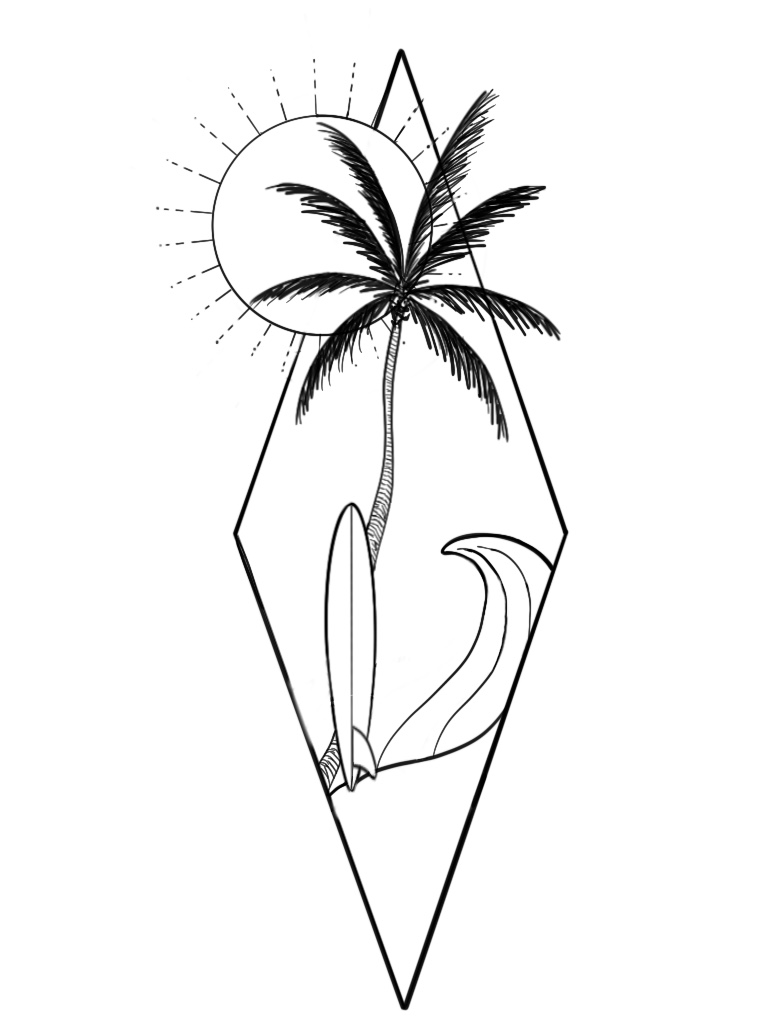
• “A palm tree and a wave.”
• “Simple… but not too simple.”
Those words point in a direction, but they don’t yet define the destination. So we start exploring. Each sketch becomes a question.
Is the palm tree taller?
Should the wave feel calm or powerful?
Should the design feel geometric or organic?
With each iteration, the client reacts. They may not know how to explain what’s wrong, but they can feel it.
“That’s closer.”
“Not quite.”
“I like this part.”
What might look like trial and error is actually something much more useful. Information.
Every Draft Reveals the Hidden Image
To an outside observer, early drafts can look like failures. But they’re not. Each version reveals another layer of the idea.
It’s like peeling an onion or slowly focusing a lens. Every sketch helps the client see the image more clearly. Sometimes they don’t fully recognize what they wanted until it appears in front of them.
And when it finally clicks, you see it immediately. Their reaction changes.
“That’s it.”
Not almost. Not close. Exactly it.
The Artist’s Job Isn’t Just Drawing
Some artists don’t have the time or patience for this part of the process, and that’s understandable. Tattooing is demanding work, and schedules can be tight.
But for me, this stage is one of the most enjoyable parts of the craft. It’s a puzzle. You’re not just drawing a picture. You’re translating someone’s internal vision into something permanent.
That requires listening carefully, reading subtle reactions, and sometimes making leaps of intuition. In those moments, the tattoo artist almost has to become a little bit clairvoyant.
As you develop your relationship with your clients, this will become easier. Brandon and Nathan from Tattooing 101 talk about this subject often.
Capturing the Vibe

On paper, it’s a minimal concept. But arriving at the right balance of shape, placement, and energy still required exploring the space and refining the composition.
Simple tattoos often demand the most precision. There’s nowhere for mistakes to hide.
When the final version comes together, the lines feel balanced and the elements support each other naturally. The design finally carries the same feeling the client had in their mind from the beginning. That moment makes the entire process worth it.
From Idea to Skin
Tattooing is often thought of as decoration. But at its best, it’s collaboration. Each must trust the process.
The client brings the meaning.
The artist brings the visual language.
Somewhere between those two things, the real design emerges. And when it does, what started as a vague idea becomes something permanent, clear, and personal.
_________________________________
As an artist, if you haven’t yet developed all the skills in this process, it can feel like trying to become clairvoyant, but I encourage you to keep learning new skills, and trust the process.
Leave a Reply